Wings Snob kitchen, Los Angeles
About the Wings Snob Kitchen
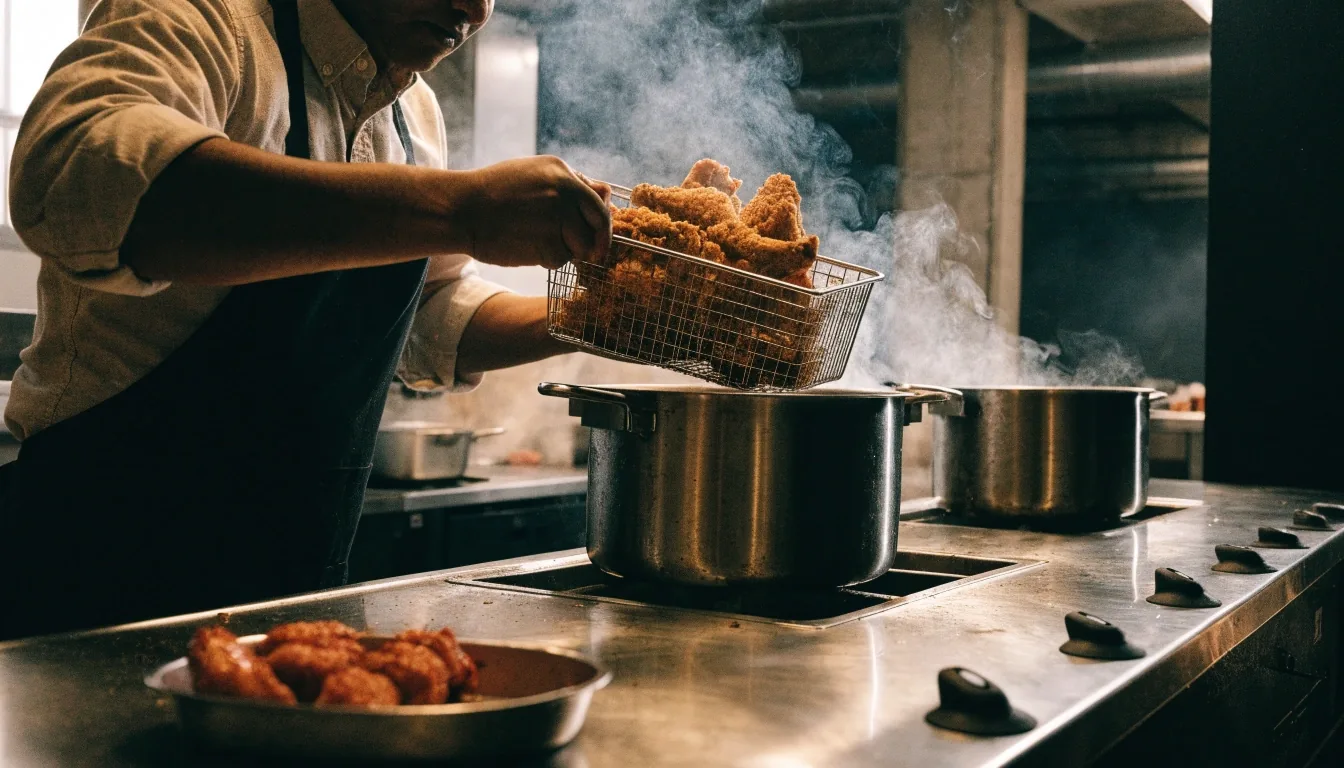
Wings Snob is a cooking course, not a restaurant chain. The lessons are filmed in a working kitchen at 2801 W Sunset Blvd in Los Angeles, and the curriculum was built around one question: what actually keeps Nashville hot chicken crisp, juicy, and balanced under a heavy spice paste?
Where the course comes from
The kitchen is in Los Angeles, but the dish is from Nashville, Tennessee. That gap shaped the course. Most students will never cook in a dedicated hot chicken shop, so the lessons translate restaurant technique into a home stovetop: a Dutch oven, a countertop fryer, a normal oven for holding. The goal is a plate that tastes like the style without requiring commercial equipment.
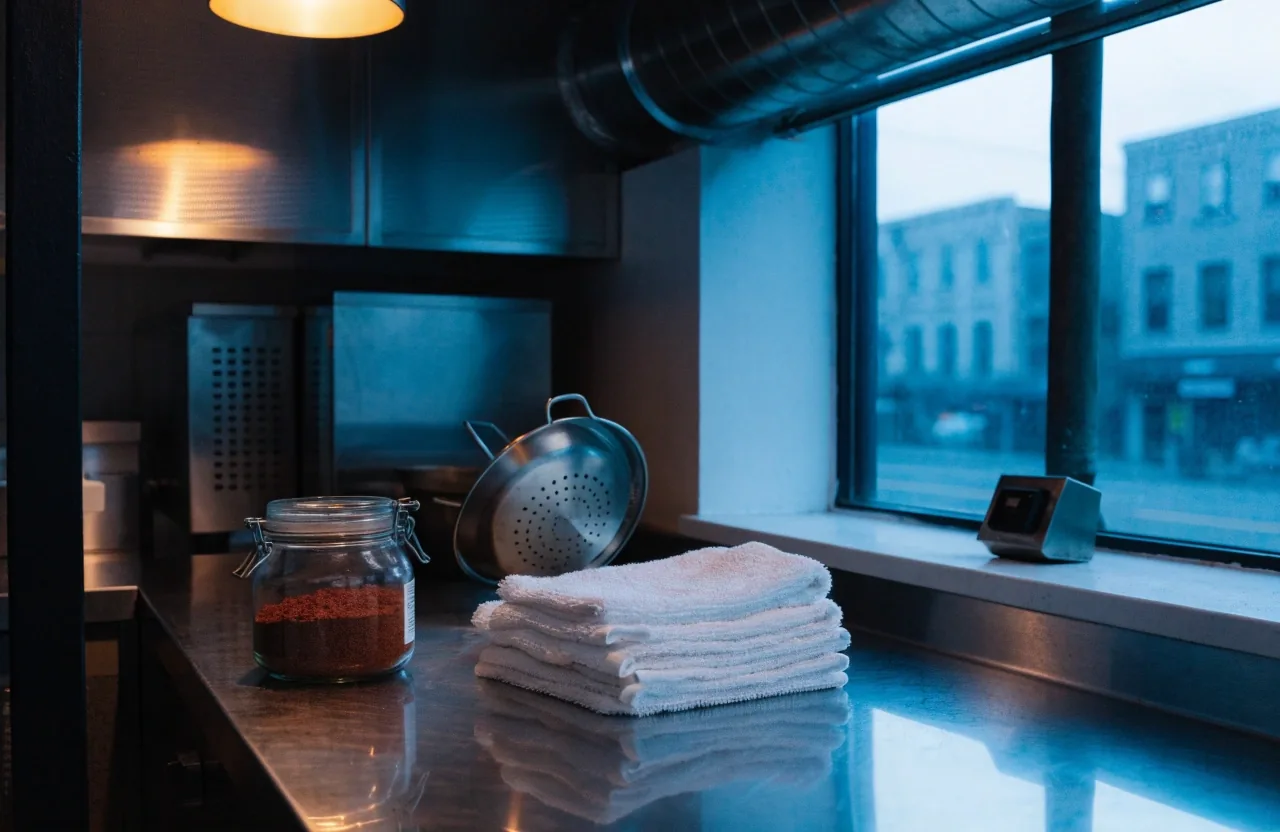
Filming here also keeps the lessons honest. When a batch of tenders loses its crust because the oil dropped too far, that failure stays in the edit, because the fix is the lesson. The room itself is not styled for camera work: the same burners, sheet trays, and cooling racks you would find in a serious home kitchen, run at the volume a class needs.
That choice carries through to the shopping list. Every ingredient in the course is something you can buy at a normal grocery store or a Latin or Asian market in most U.S. cities. No commercial breading line, no specialty fryer, no restaurant-only paste base. If a step depends on equipment you cannot fit on a home counter, it is rewritten or left out.
See the full curriculum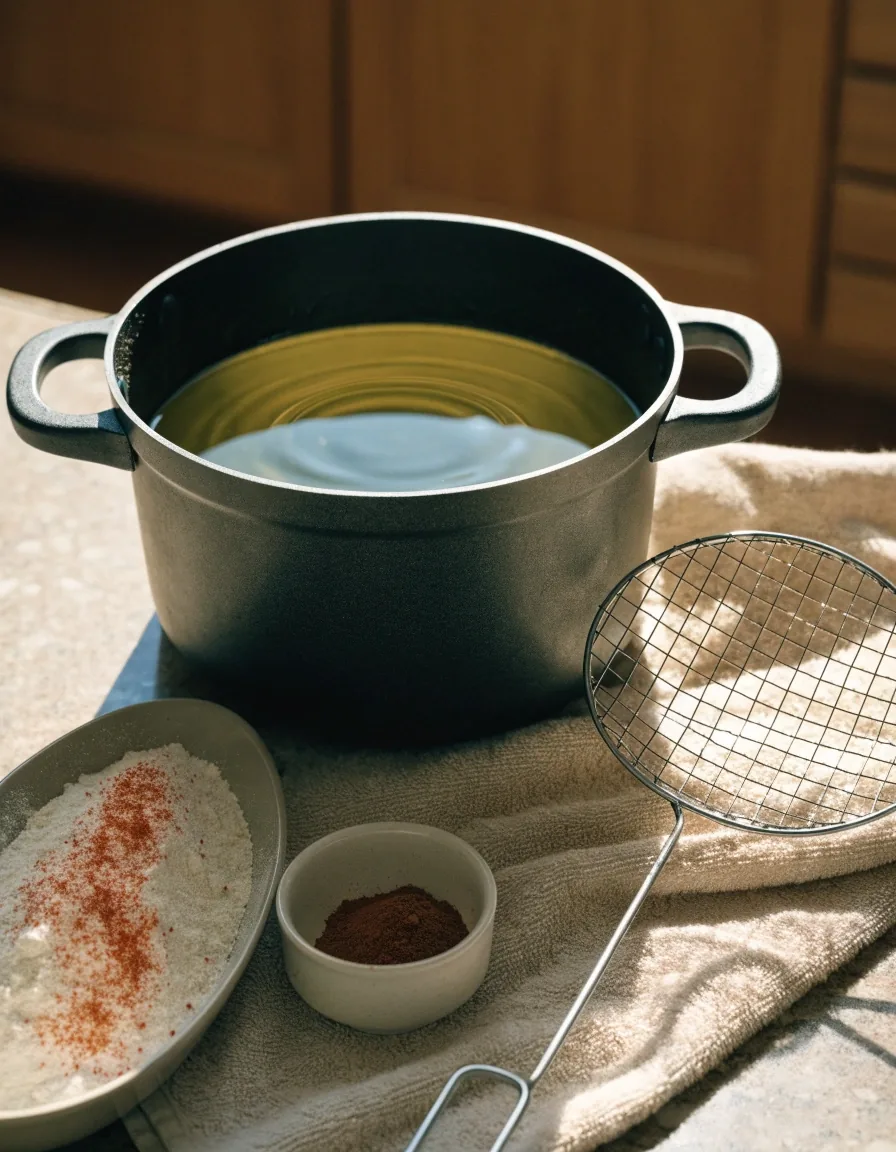
The course was written against a setup like this one, not a commercial fry line. If a technique needs a tool you already own, it is worth teaching.
What decides the plate
Three things decide whether hot chicken works, and everything else follows from them.
What the instructor focuses on
The teaching centers on three things that decide whether hot chicken works. Lessons are short and specific for that reason. A student should be able to fix one problem at a time instead of guessing at the whole plate.
- Coating adhesion
- Crust that slides off the moment the paste hits it is the most common home failure. The lessons cover dredge consistency, rest time before frying, and how much pressure to use when pressing the coating onto each tender, slider fillet, or wing.
- Oil temperature control
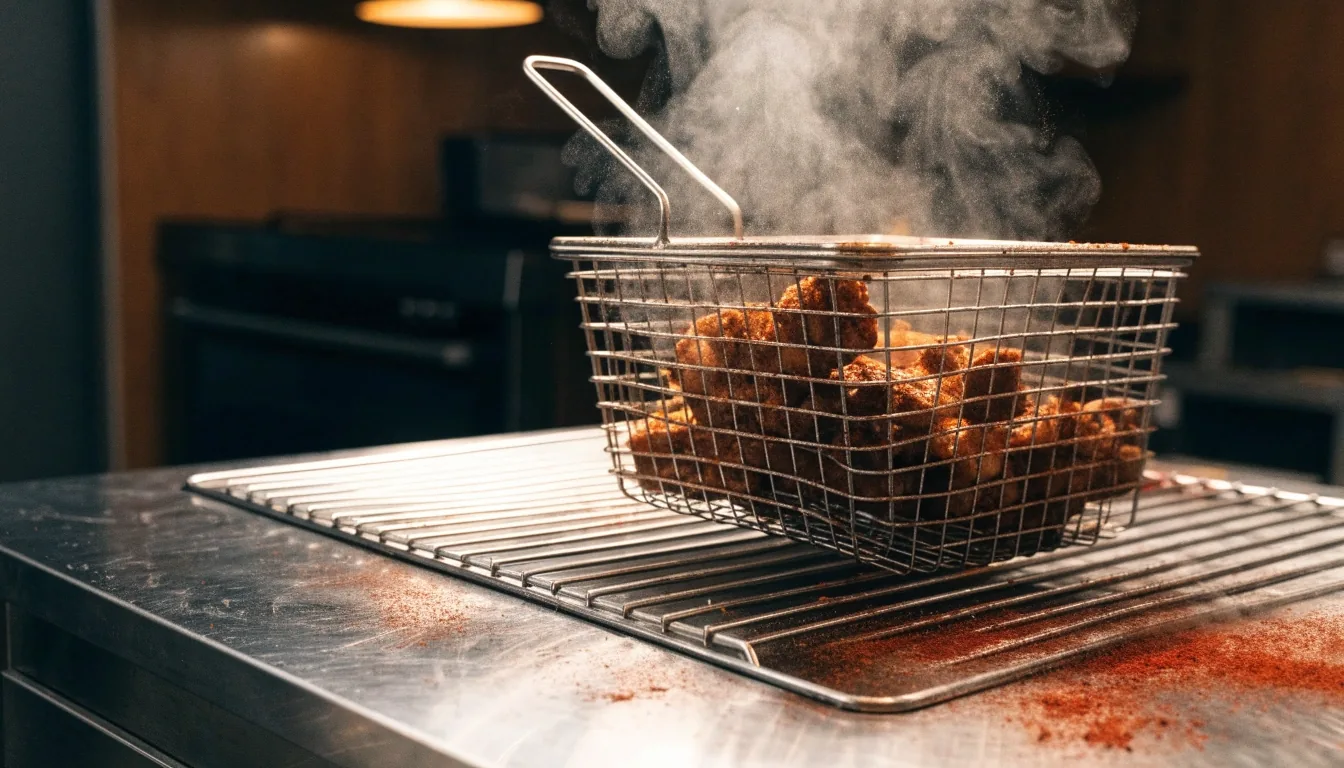
- Oil that cools too fast gives you pale, greasy chicken. The course shows how batch size, a thermometer you already own, and a short recovery wait between rounds keep the fry steady from the first tender to the last wing.
- Paste balance
- Heat without salt, acid, or sweetness reads as flat and punishing. Each heat level is built from the same base paste, adjusted so the flavor still holds at the milder tiers and the Reaper tier stays edible rather than bitter.
Every other decision in the course, the heat level, the sauce, the plating, is downstream of these three. That is why the lessons are ordered the way they are and why you can repeat a single one without redoing the whole cook.
Why the heat ladder is central
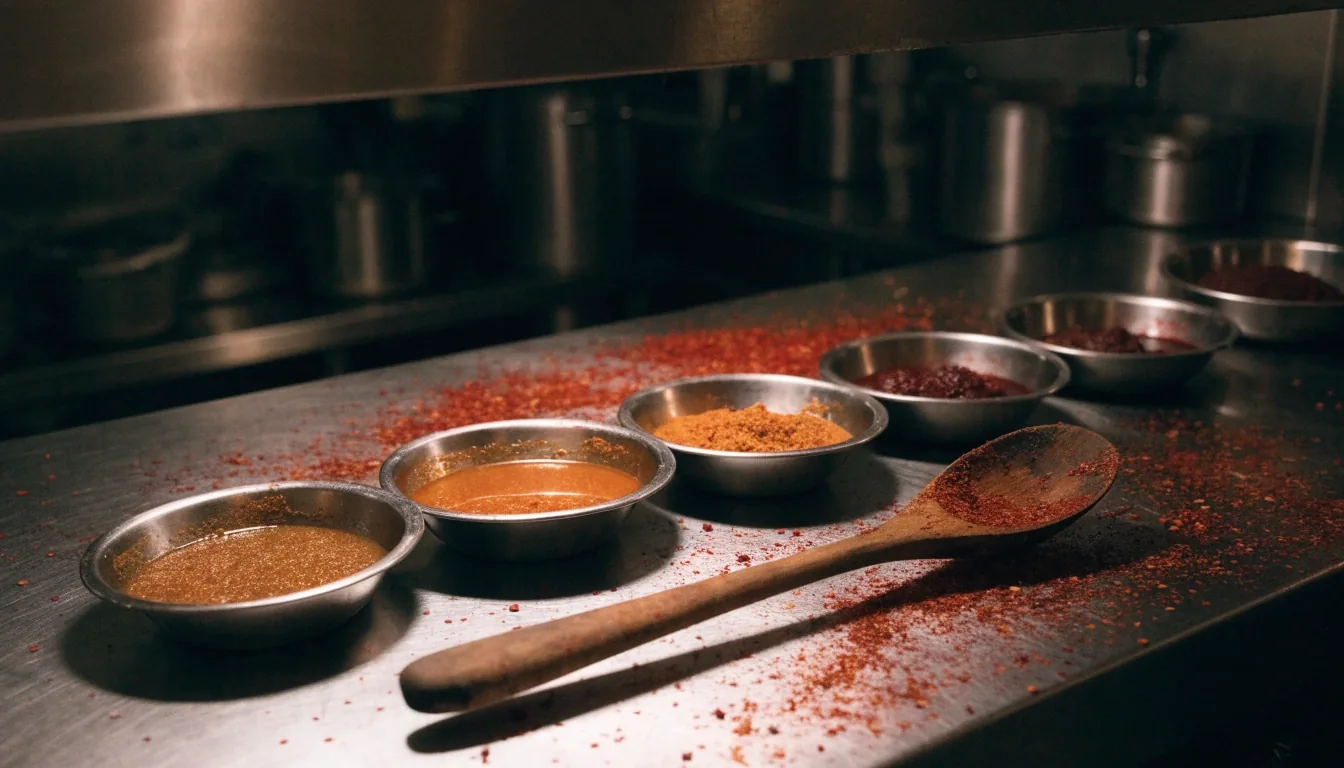
Restaurant menus commonly run from mild to very hot, and the extreme end of that spectrum, Reaper-level heat, gets outsized attention online. The course treats the ladder as a progression rather than a stunt. Each tier is a complete plate that should taste good on its own.
That approach comes from watching home cooks jump straight to the hottest level, produce something inedible, and conclude they cannot cook the dish. Working up the tiers teaches you how the paste behaves before the heat gets loud enough to hide mistakes.
Walk the heat ladder and saucesWhat the style actually is
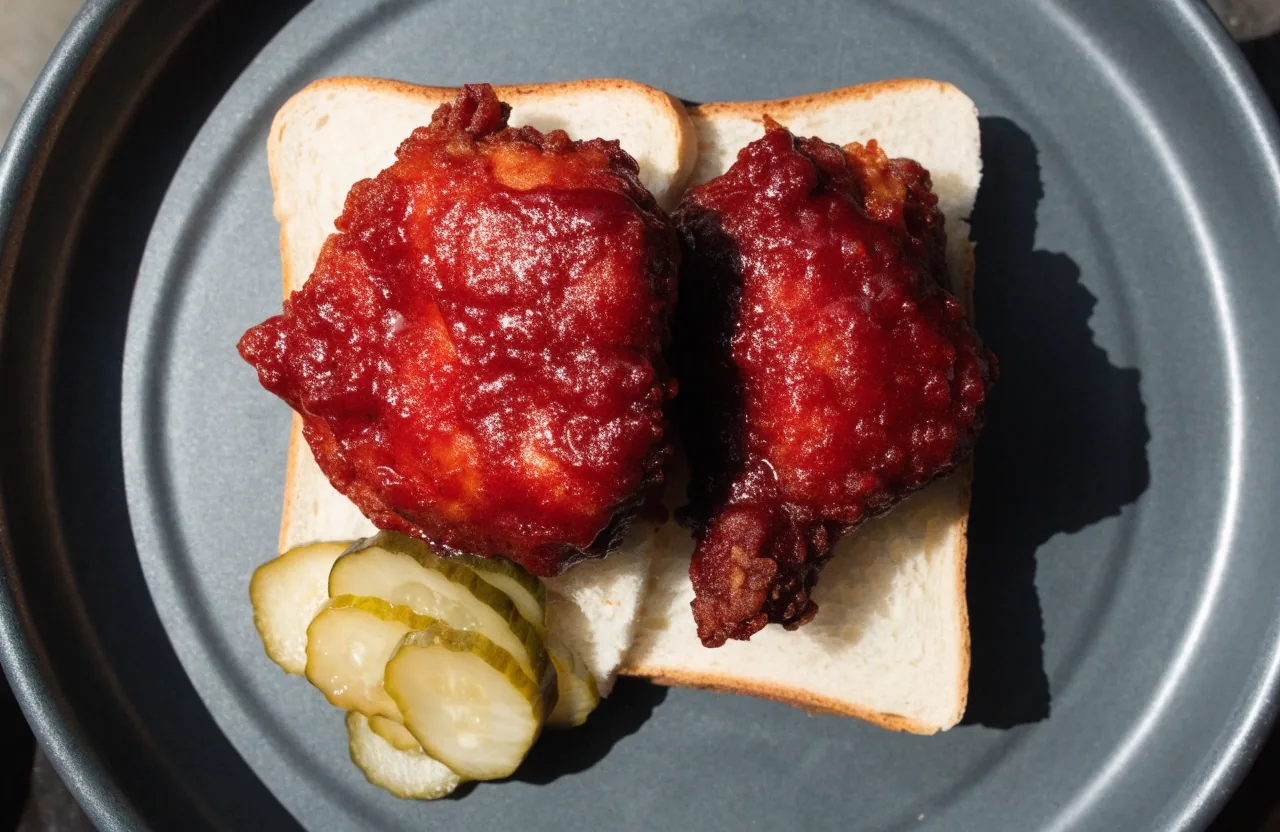
Nashville hot chicken is a regional specialty: fried chicken coated in a spicy paste or sauce, typically served with white bread and pickles. The definition matters because it separates the style from generic spicy fried chicken.
The paste, the bread, and the pickles are not optional garnish. They are the structure of the dish, and the course treats them that way. The paste carries the heat and the color, the bread soaks up what runs off, and the pickles cut the fa so the next bite still lands.
Take any one of the three away and you get something else: a spicy fried chicken plate that tastes heavy by the second piece. Because of that, the course teaches the full assembly, including the two minutes where the paste goes on hot chicken and the plate gets built, not just the frying.
How the style spread
The dish has become a national symbol of Nashville food culture, and it now appears well beyond dedicated chicken shops. That spread matters to the course because it shows the style can live in different formats, not only a takeout window.
-
Biscuit Love
A Southern brunch restaurant often cited in Nashville food coverage for serving hot chicken in a brunch context. It shows the style moving into broader Southern dining, where the plate sits next to biscuits and eggs instead of standing alone.
-
Waldo's Chicken & Beer
Founded in Nashville with locations in Germantown and West Nashville, it pairs hot chicken with a bar-and-beer format that broadens who orders it. The pairing is a useful lesson in how a hot plate is served to a table that is not only there for heat.
-
Bite a Bit Hot Chicken
Tourism coverage of the Nashville hot chicken trail includes smaller spots alongside the famous names, and this one appears in that coverage as part of the city's food ecosystem. The trail format is worth knowing: the dish is not one address.
-
Pepperfire Hot Chicken
Also listed on the trail and known for strong heat, generous portions, and menu items that go past the standard plate into mashups. That range informed the course's approach to experimentation: the base plate comes first, and the variations come after.
Reading across these kitchens, a pattern shows up. The strongest versions of the dish are consistent on the basics and playful everywhere else. That is the posture the course takes: lock the coating, the oil, and the paste, then let the format move.
Restaurant heritage in recipe form
Two cookbooks frame how the dish moved from a city specialty into a national cooking format. The Hot Chicken Cookbook, by Timothy Charles Davis, features more than two dozen recipes from Nashville hot chicken restaurants and beyond. The Prince's Hot Chicken Cookbook ties the best-known origin brand to home cooking.
Both show the same thing the course is built on: restaurant technique can be written down and repeated at home. That is the whole premise here, and it is why the lessons spend time on what changes when a professional method lands on a home stove.
How the curriculum was built
The course was assembled by cooking the same plates repeatedly and noting where home kitchens diverge from restaurant ones. Each failure became a lesson.
-
Coating first
Dredge, rest, and press. Bread that goes soggy, coating that slips, and crust that shatters off the moment it is sauced all trace back to this step, so it comes before any heat enters the picture.
-
Heat second
Oil temperature, batch size, and recovery time. Paste that tastes flat is usually a temperature problem, not a spice problem, and the ladder is walked in order so the flavor holds at every tier.
-
Formats third
Tenders, sliders, and wings once the base plate is reliable. Same paste, same fry logic, different surface area and hold time, which is exactly where most home cooks get caught out.
That sequence comes directly from testing rather than from a fixed teaching template. Nothing was added because a course is expected to have it. If a lesson did not fix a real failure in this kitchen, it did not make the cut.
Where to go from here
If you want the lesson order and what each one covers, the curriculum page lays it out. If you are comparing what you get for the money, the enrollment page breaks down the plans. If something about your own kitchen setup is holding you back, ask before you buy.
The kitchen is at 2801 W Sunset Blvd, Los Angeles, CA 90026. Questions by phone at +1-323-555-0947 or email at [email protected], Monday through Friday, 9:00 AM to 6:00 PM.