Wings Snob course guide
Heat Ladder and Signature Sauces
This page is the Wings Snob guide to heat levels and sauces. It explains what each tier tastes like, how the spice paste is built, and how to move up or down the ladder without reworking the recipe. Use it to pick your starting level and to understand what changes as the heat climbs.
One base paste. Five tiers. Nothing rebuilt between them.
The recipe stays the same from mild to Reaper. What changes is the chili you add and how much of it goes into the warm oil.
Sauce is a separate decision from heat. A wing glaze and a slider sauce are built differently because they sit on different food.
Balance is the test at every tier. If a level only tastes hot, the seasoning or the layers are off, and that is fixable.
How each heat level tastes and builds
Read down the ladder in order, or jump to the tier you already cook at. Each level notes what carries the flavor, what to watch for, and when to move on.
-
Mild: flavor before fire
Where balance is learned
Mild is where you learn whether your paste is balanced. At this level the paprika and a small amount of cayenne carry the flavor, with brown sugar and a little vinegar rounding it out. You should taste spice, salt, and sweetness in roughly even measure. If mild tastes flat, the problem is seasoning, not heat, and that is worth fixing before you climb.
-
Medium: the everyday level
Most lessons are taught here
Medium is the tier most people settle into for a normal dinner. The cayenne increases, a second chili comes in, and the paste gets a deeper color. It is still a level you can serve to guests who like spice without warning them first. This is also the level used in most of the course's technique demonstrations, because the paste is strong enough to taste but not so strong that it hides mistakes.
-
Hot: where the paste matters
The tier home cooks get wrong
Hot is the point where the spice paste stops being a coating and starts being the main event. The cayenne and chili layers build, and the oil carries more of the heat into the crust. Balance gets harder here. Too much sugar and the paste turns candy-sweet; too little and it tastes harsh. The lessons spend real time on this tier because it is the one most home cooks get wrong.
-
Extra hot: built in layers
Depth instead of flat burn
Extra hot is not just more cayenne. It is built by layering chilis so the heat has depth instead of a single flat burn. You will work with a hotter chili alongside the cayenne and adjust the oil so the paste blooms properly. The result should still taste like chicken, bread, and pickles, just with a serious edge. If you cannot taste anything but heat, the layers are out of order.
-
Reaper-level heat: the far end
An extreme tier, not a dinner default
Reaper-level heat signals ultra-high heat, named for Carolina Reaper peppers, and it functions as shorthand for the end of the spicy chicken spectrum. It appeals to challenge diners rather than casual eaters, and it is best treated as an extreme tier rather than an everyday serving level. The course covers it with clear handling notes: small batches, ventilation, gloves, and a realistic sense of what you are getting into.
The base spice paste
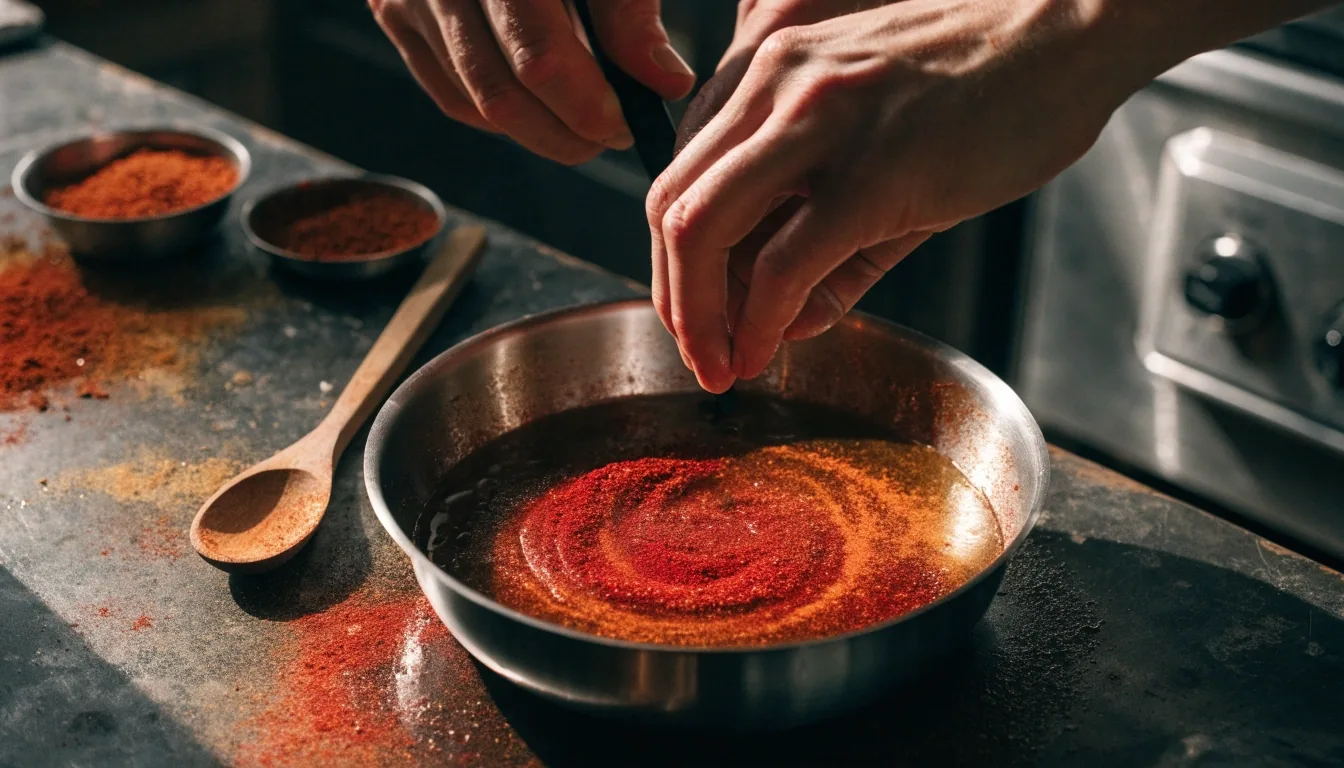
Every tier starts from one base: a warm oil, ground chilis, paprika, cayenne, brown sugar, salt, and a splash of vinegar. You bloom the spices in the warm oil, taste, then adjust upward. Scaling the ladder means changing chili amounts and types, not rebuilding the recipe. That single base is what makes the heat levels consistent from mild to Reaper.
-
Warm the oil
Oil hot enough to move the spices, not to scorch them. This is where most paste mistakes start.
-
Bloom the chilis
Paprika, cayenne and ground chili go in together so the color and flavor open up at the same time.
-
Round it out
Brown sugar and a splash of vinegar keep the paste from reading as a single harsh note.
-
Taste, then climb
Salt and spice get adjusted at the pan. The next tier is a chili swap, not a new recipe.
Signature sauces, and what each one is for
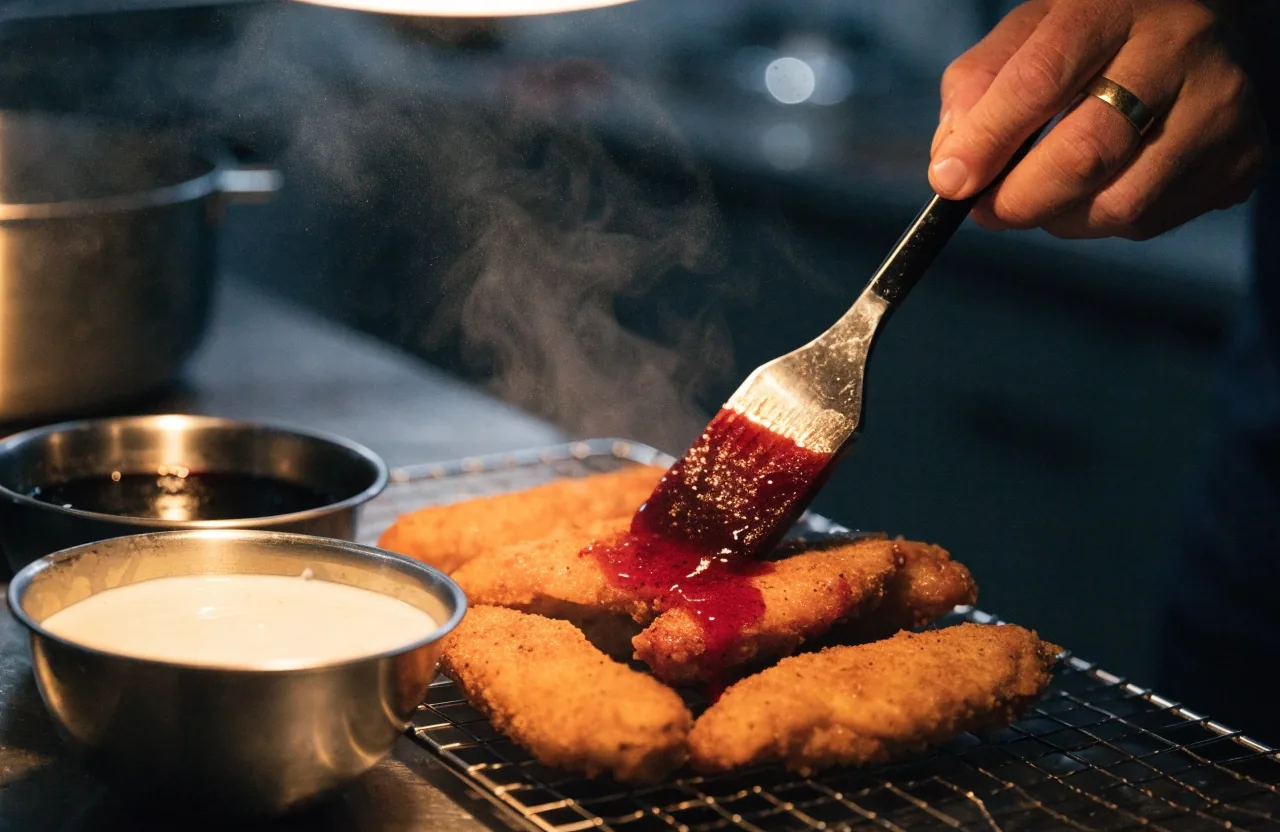
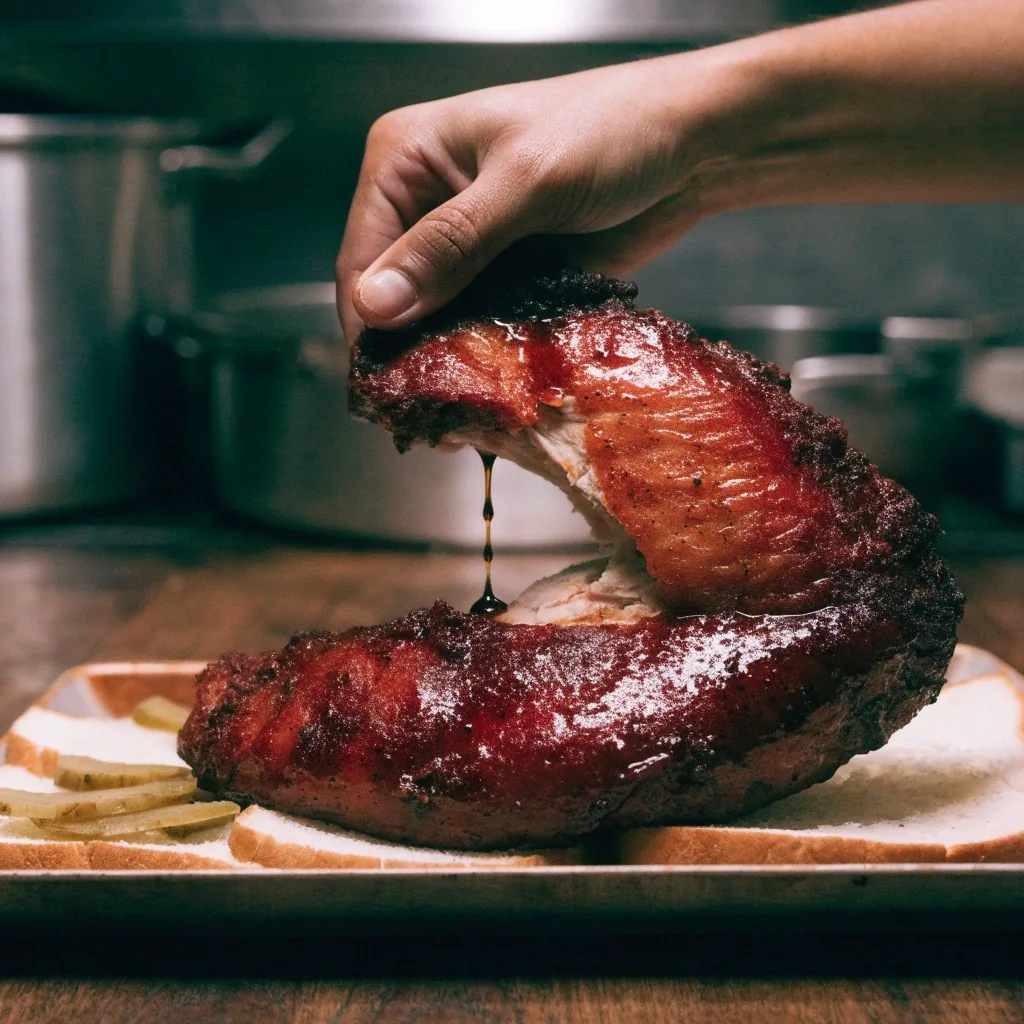
Sauce is a separate decision from heat. The classic coating is a spiced oil brushed or spooned over the fried chicken. A creamier sauce works better on sliders, where it holds the bun and the slaw together. Wing glazes need to cling without softening the crust, so they are built thicker and applied at the last moment. Each sauce has a job, and the course pairs them with the right format.
-
Spiced oil coating
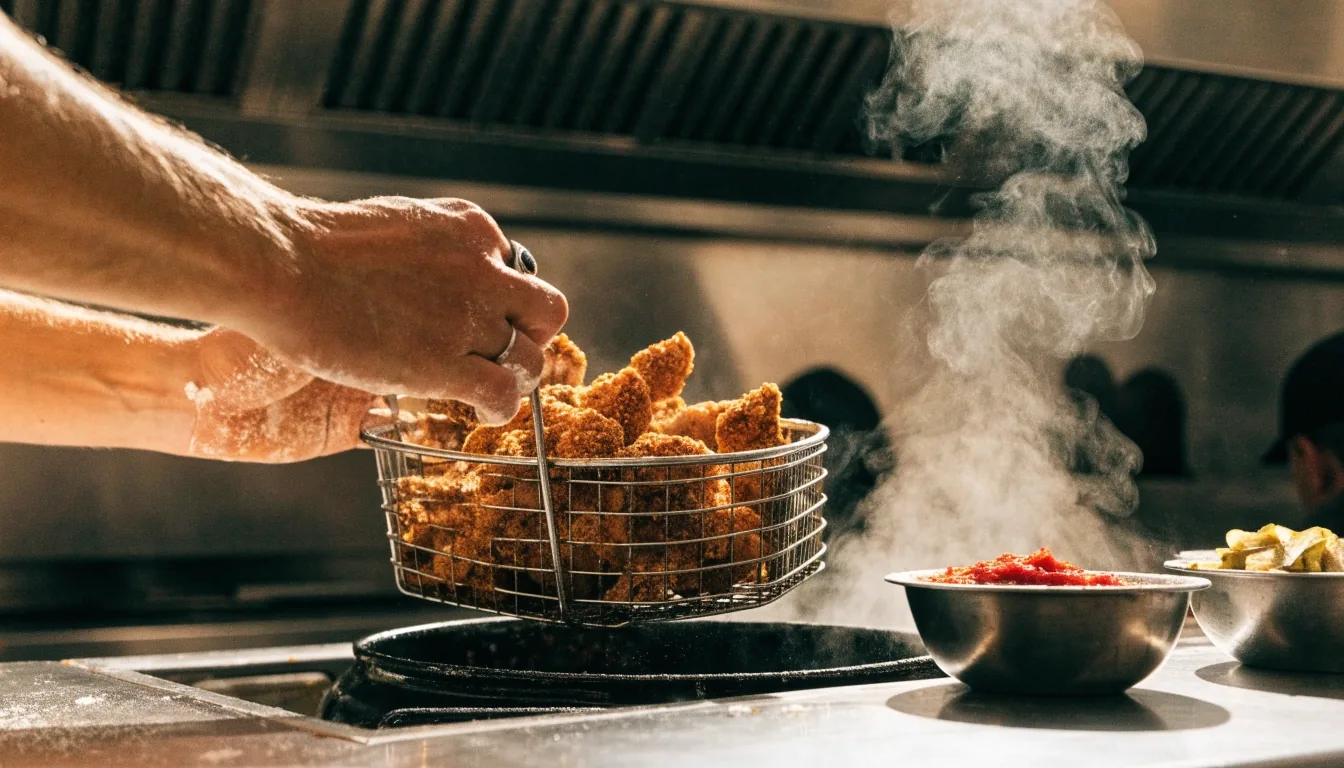
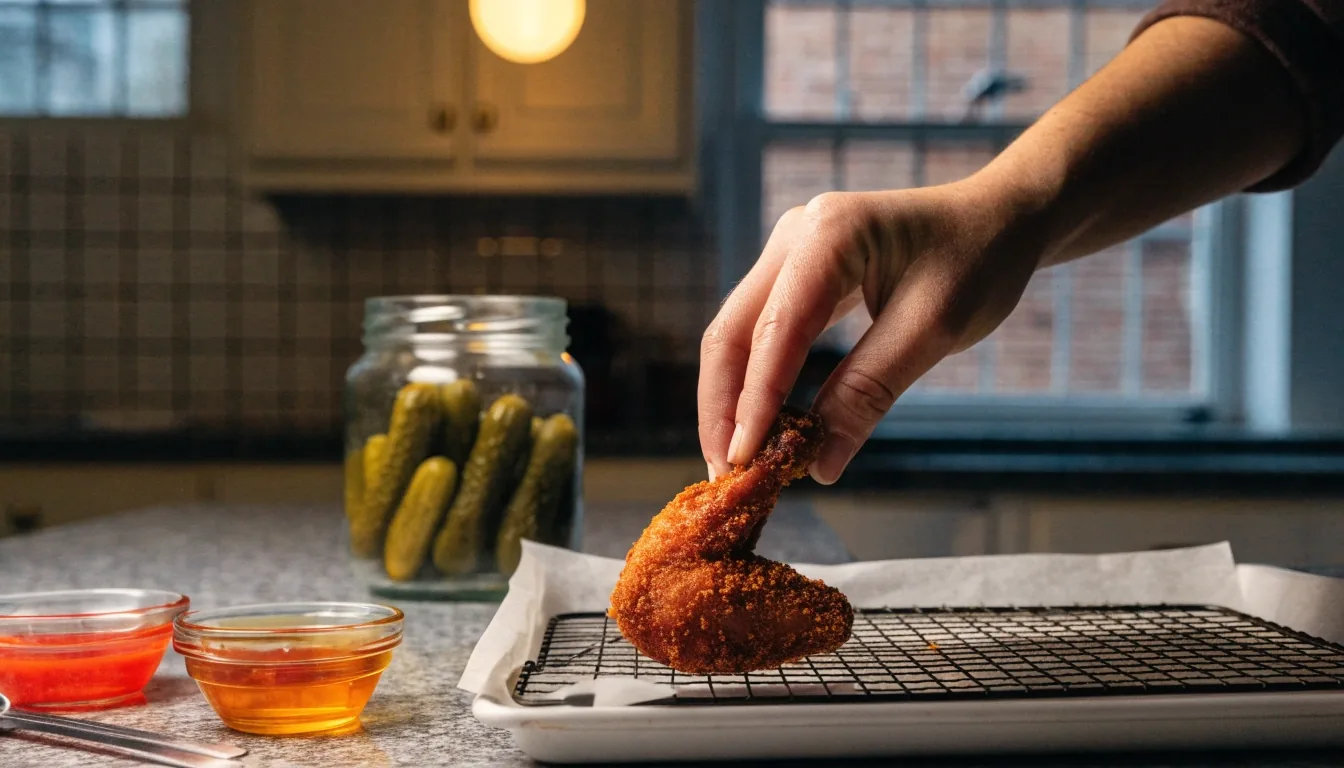
Brushed or spooned over fried tenders and wings right after they leave the oil, so the crust stays crisp under it.
-
Creamy slider sauce
Built to hold a bun and a slaw together on sliders without turning the bread soggy before the plate reaches the table.
-
Wing glaze
Thicker than the coating and applied last, so it clings to the wing instead of softening the crust underneath.
Pickles and white bread as balance
Heat needs contrast. Pickles bring acid and crunch, and white bread soaks up the spiced oil that runs off the chicken. Without them, a hot piece of chicken reads as one flat note. The course covers quick-pickling cucumbers at home and explains how much sauce to spoon over the bird so the bread does the job it is there to do.
- Pickles
- Acid and snap against the oil. Quick-pickled cucumbers are covered in the course so you can make them the same day.
- White bread
- Catches the spiced oil that runs off the bird, so the plate does not read as heat alone.
- How much sauce
- Spooned, not poured. Enough to coat the crust without drowning the bread it sits on.
Choosing a level, and moving up
Start one level below where you think you belong. Cook a full batch, taste it, and note what you would change. Move up only when the current level tastes balanced rather than just tolerable. The ladder is not a race, and the course is built so each tier is a complete, good-tasting plate before you climb to the next.
If you are stuck between two levels, cook the lower one twice and adjust the chili on the second batch. That tells you more about your own tolerance than any chart can, and it keeps a disappointing plate out of the middle of a dinner.
Wings Snob · 2801 W Sunset Blvd, Los Angeles, CA 90026
Questions about a tier? Call +1-323-555-0947 or email [email protected].
Office hours Monday–Friday, 9:00 AM – 6:00 PM.
Common questions about heat levels
Short answers to what students ask most before they start. If your question is not here, the Student Kitchen FAQ covers the rest of the course.
Visit the Student Kitchen FAQWhich heat level should I start at?
Start one level below where you think you belong. Mild and medium are where most people learn to read their own paste, and a balanced medium tells you more than a hot plate you cannot taste through.
Is Reaper-level heat an everyday serving?
No. It is an extreme tier named for Carolina Reaper peppers, and the course treats it that way: small batches, ventilation, gloves, and clear handling notes before you cook it.
Do I need different recipes for each tier?
No. The base paste stays the same. You change the chili amounts and types, and you adjust the oil and seasoning at the pan. That is what keeps the levels consistent.
Can I serve two heat levels from one batch?
Yes. Fry the batch once, then split the coating: keep part of it at the lower tier and build the hotter paste for the rest. The course shows how to do that without softening the crust on either portion.
How do I know when a level is balanced?
You should still taste salt, sweetness, and acid alongside the heat. If the only note is burn, adjust the sugar and vinegar or move down a tier before you climb again.