Enrollment Options for the Hot Chicken Course
The course is online and self-paced, so the main decision is how much support and access you want. Read the plans, pick one, and you can start cooking the same week.
What every enrollment includes
Every plan gives you the full lesson library: brine and dredge, spice paste, the heat ladder from mild to Reaper-level, sauce builds, and the tender, slider, and wing modules. You also get the plating and serving lessons and the notes on what to do when a batch goes wrong. Nothing in the core curriculum is locked behind a higher tier.
That matters when you are comparing plans. You are not choosing which recipes you get to learn. You are choosing how long you can revisit them and how much help you want along the way.
See the recipes and techniques-
Brine and dredge
Why the coating has to hold before the sauce matters, and how to build a dredge that stays put through the fry.
-
Spice paste and heat ladder
The full range from mild to Reaper-level, with the paste balance that keeps heat from flattening the flavor.
-
Tenders, sliders, wings
Three modules that share one coating method but different fry timing and saucing order.
-
Plating and serving
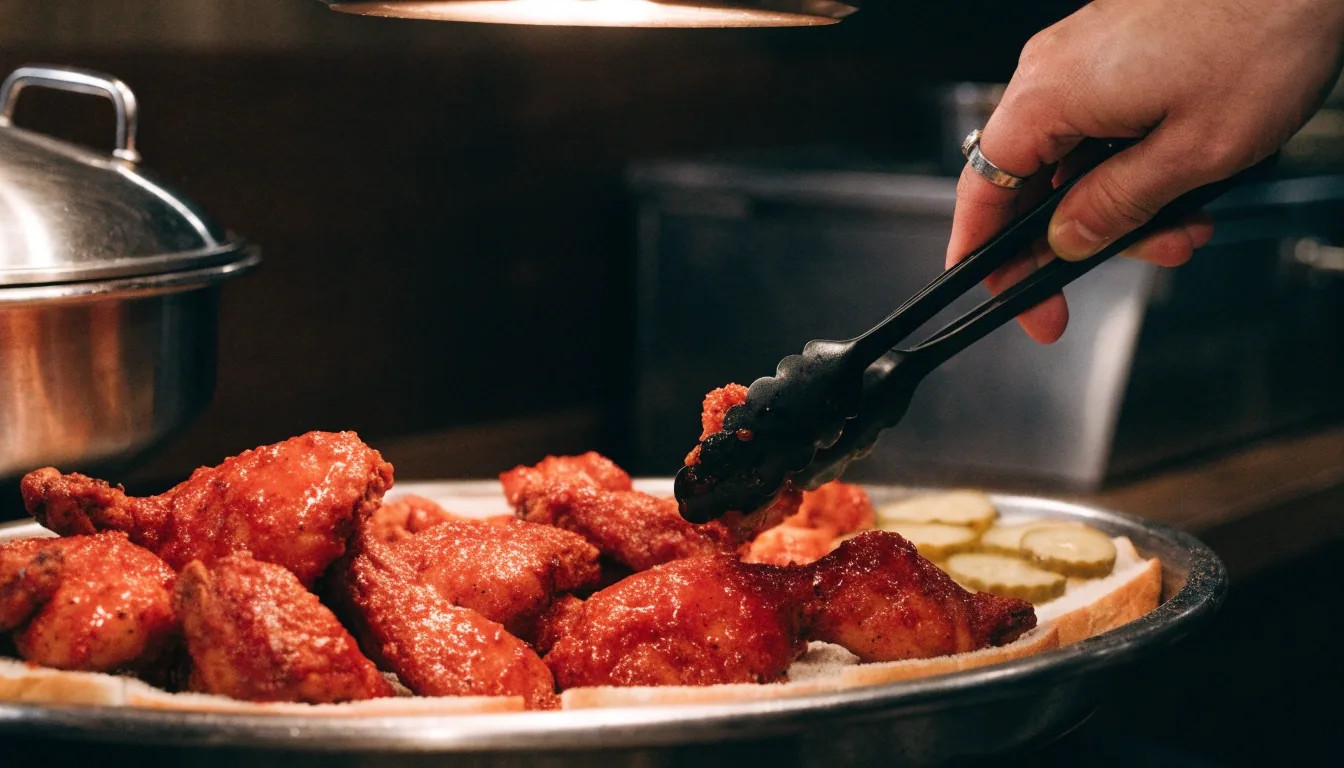
How to hold crunch at the table, plus the notes on what to do when a batch goes wrong.
The plans differ in access length, feedback, and live sessions — not in the recipes themselves.
Plan comparison
The plans differ in access length, feedback, and live sessions, not in the recipes themselves. A shorter-access plan suits someone who wants to work through the material once. A longer plan suits cooks who want to revisit modules across seasons and test the heat ladder slowly. Check the plan details below for current access periods and session counts.
Starter access
For cooks who want to work through the material once at their own pace, without live sessions or personal feedback.
- Full lesson library, all modules
- Shortest access period of the three plans
- Self-paced, no set schedule
- No live kitchen sessions included
Standard access
For cooks who want to move through the heat ladder with room to revisit modules and sit in on live sessions.
- Everything in Starter access
- Longer access period than Starter
- Live kitchen sessions included
- Self-paced, no set schedule
Feedback access
For cooks who want input on their own batches. This is the fastest way to move up the heat ladder.
- Everything in Standard access
- Longest access period of the three plans
- Personal feedback on your own cooks
- Upgrade later if you start smaller
Can I upgrade later? Yes. You can move to a longer-access or feedback plan after you start. If you are unsure which plan fits, send a question through the contact page first, and the kitchen team will point you to the right option.
Self-paced access
The course is built to be cooked, not binge-watched. You can pause on a step, rewatch the spice bloom, and work at your own speed. Access length varies by plan, and the lessons remain the same.
Most students start with the brine and dredge module before touching the heat ladder, because the coating has to hold before the sauce matters. From there, the tender, slider, and wing modules each take a different angle on the same base method.
Suggested starting path
Brine and dredge first. Spice paste and the lower end of the heat ladder second. Then tenders, sliders, and wings, in whichever order matches what you actually cook at home.
Live kitchen sessions
Some plans include live sessions where you can ask about a batch that did not work. Common questions are about oil temperature, paste balance, and why a coating slipped.
These sessions are held from the Los Angeles kitchen at 2801 W Sunset Blvd, so the answers come from cooking rather than theory. Session availability depends on the plan you choose, and sessions are scheduled separately from the lesson library.
If you want to bring a specific problem — a crust that went pale, a paste that tasted flat, wings that lost their crunch by the time they hit the table — that is exactly what these sessions are for.
Feedback on your cooks
If you want input on your own results, the higher plans include feedback. You cook a batch, note what happened, and get specific guidance on what to change.
That is the fastest way to move up the heat ladder, because the feedback is about your paste and your oil, not a generic recipe card. It also tells you when to stop adding heat and fix the coating instead.
Equipment you will need
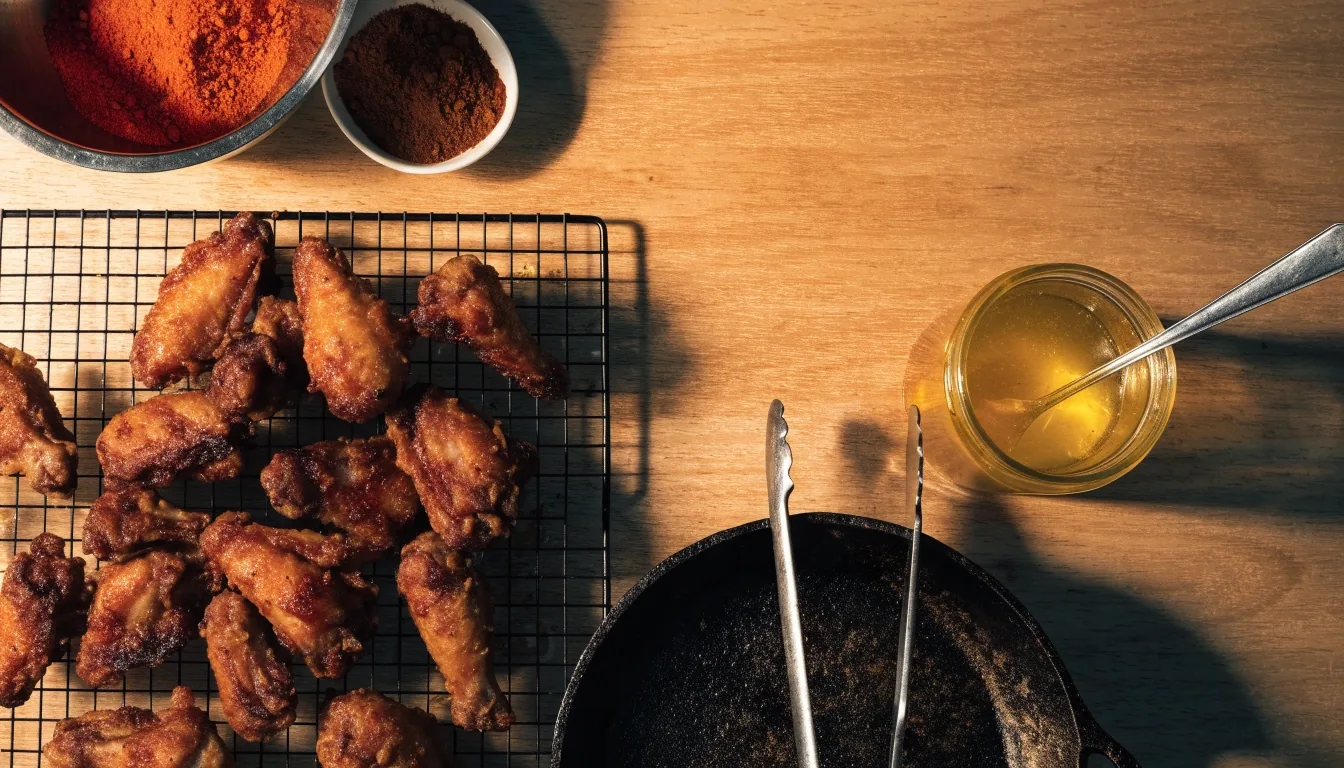
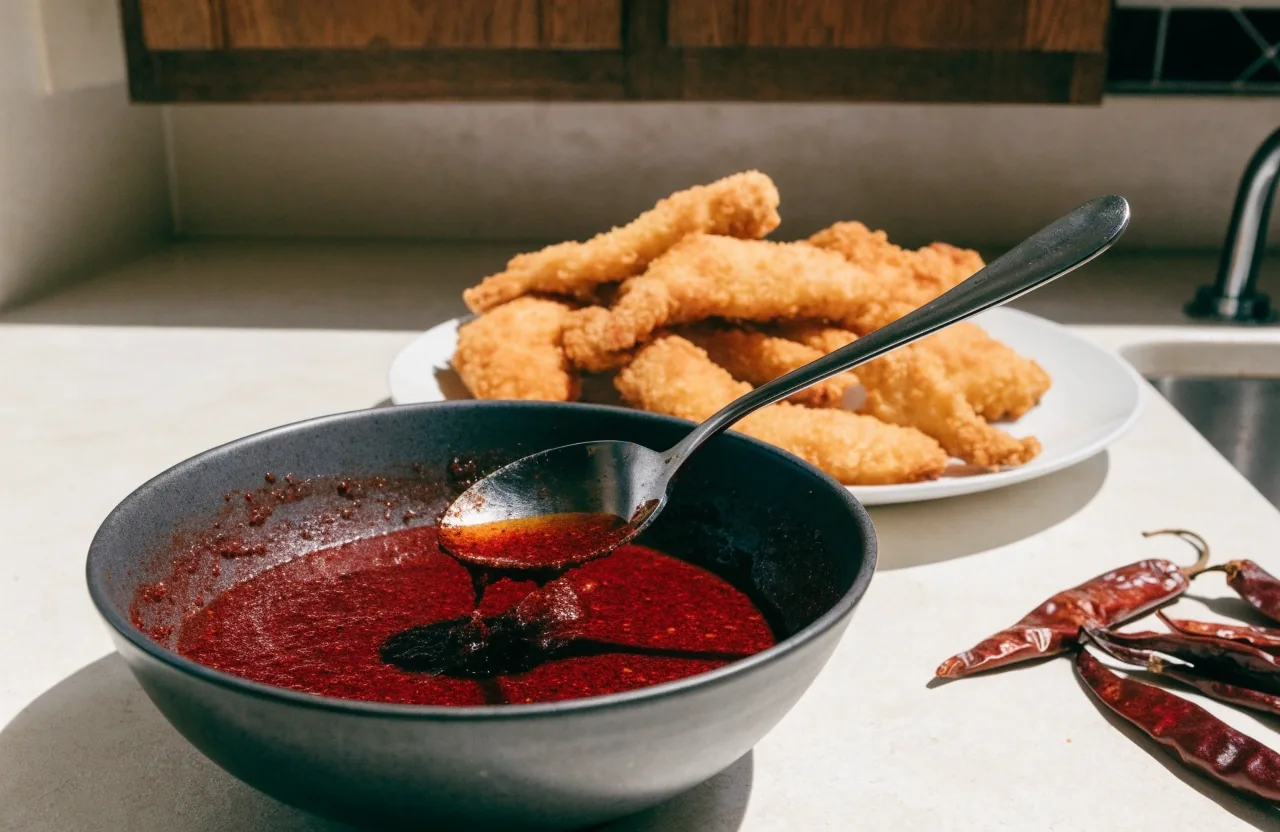
No commercial equipment is required. A heavy Dutch oven or a countertop fryer, a thermometer, tongs, and a wire rack cover most of the course. A small pot for warming the spice paste helps. The lessons assume a normal home stovetop and standard ventilation.
Fry vessel
A heavy Dutch oven or countertop fryer that holds temperature when cold chicken goes in.
Thermometer
The single most useful tool for repeatable results, and the subject of most live-session questions.
Tongs and rack
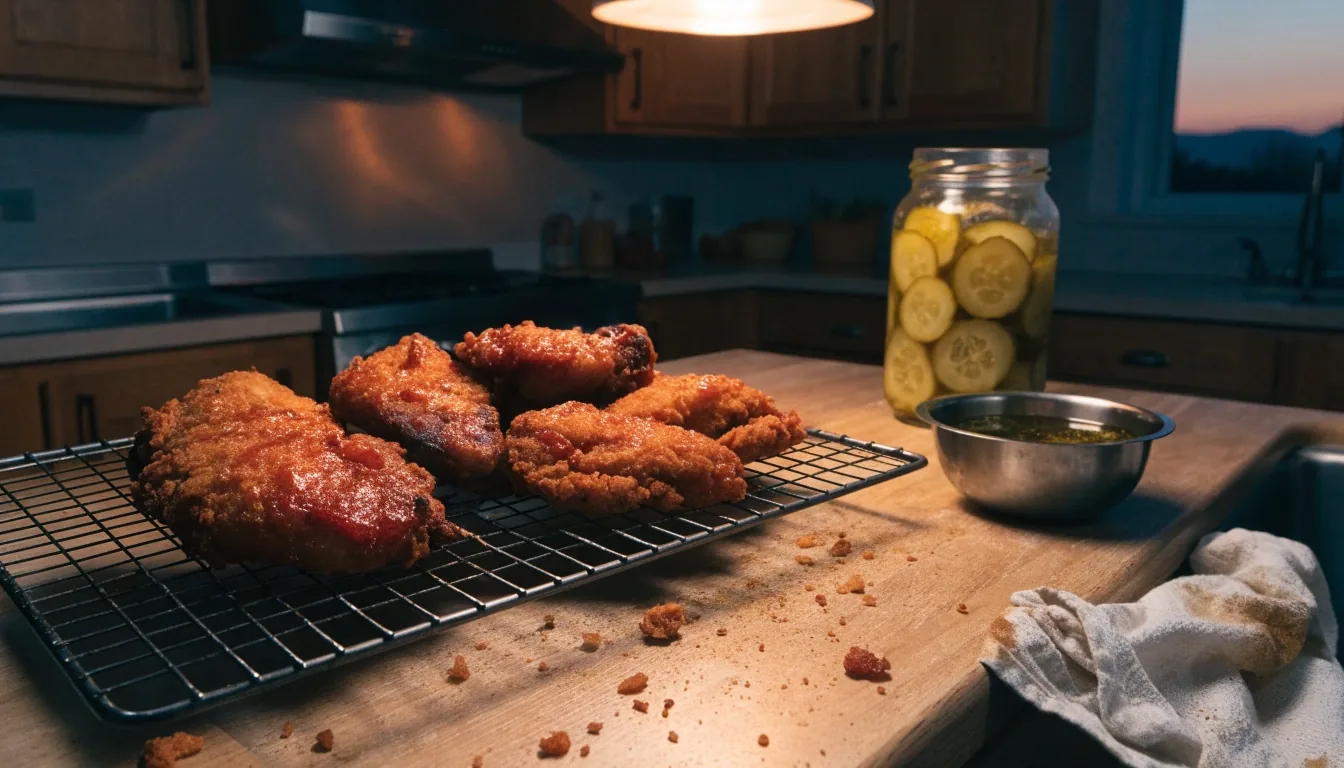
For moving pieces without knocking the coating loose, and for draining so the crust stays crisp.
Small pot
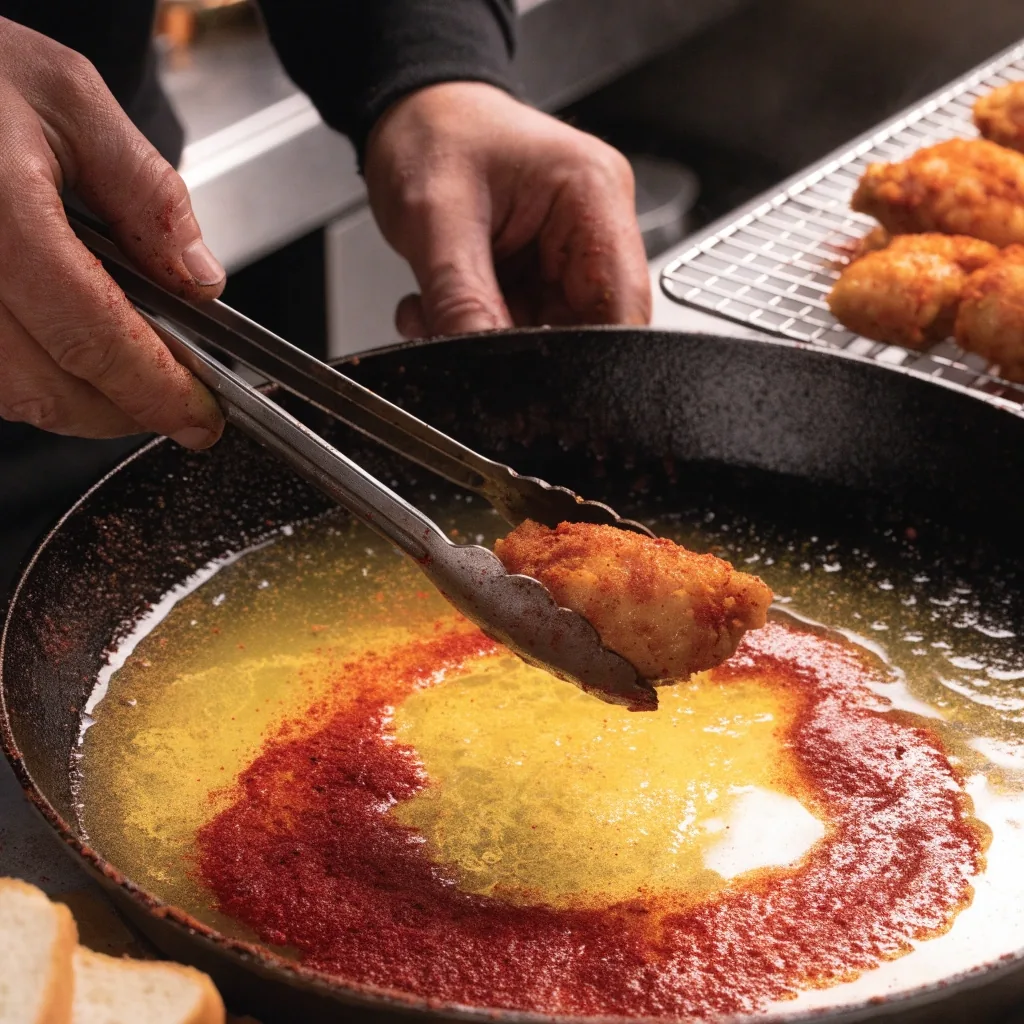
For warming the spice paste so it blends into the oil instead of sitting on top of it.
Do I need to buy special ingredients? No. The recipes use standard grocery items, and the course notes where a substitution works. If your local store does not carry a specific chile, the lessons show you what to reach for instead.
How to enroll
Pick a plan on this page and complete the sign-up. You will get access to the lesson library and a suggested starting path. If you are unsure which plan fits, send a question through the contact page first, and the kitchen team will point you to the right option.
Is there a set schedule?
No. The course is self-paced, and live sessions are scheduled separately for plans that include them. You can start the same week you enroll and work through the modules whenever your kitchen is free.
Questions before you pick?
Reach the kitchen team at the contact page or call +1-323-555-0947, Monday through Friday, 9:00 AM to 6:00 PM.
Student questions before enrolling
Can I upgrade later?
Yes. You can move to a longer-access or feedback plan after you start. Nothing you have already worked through is lost, and the lesson library stays the same.
Is there a set schedule?
No. The course is self-paced, and live sessions are scheduled separately for plans that include them. You set the pace; the kitchen sets only the session times.
Do I need to buy special ingredients?
No. The recipes use standard grocery items, and the course notes where a substitution works. If a chile or a flour is hard to find near you, the lessons show what to reach for instead.
Ready to cook the whole heat ladder?
Compare the plans above, pick the one that matches how you want to learn, and start with the brine and dredge module. If you would rather ask first, the kitchen team is one message away.