Student kitchen questions
Student Kitchen Questions, Answered
These are the questions that come up most often from students cooking the Wings Snob course at home. They cover equipment, ingredients, heat tolerance, and how the lessons run. If your question is not here, send it through the contact page.
Five answers get asked the most. Each one links to the lesson, plan or page that settles it — so you can read the short version here and go deeper when you are ready.
Equipment and setup
Most of the course works with a heavy Dutch oven or a countertop fryer, a thermometer, tongs, and a wire rack. A small pot for warming the spice paste is useful but not required. You do not need a commercial range.
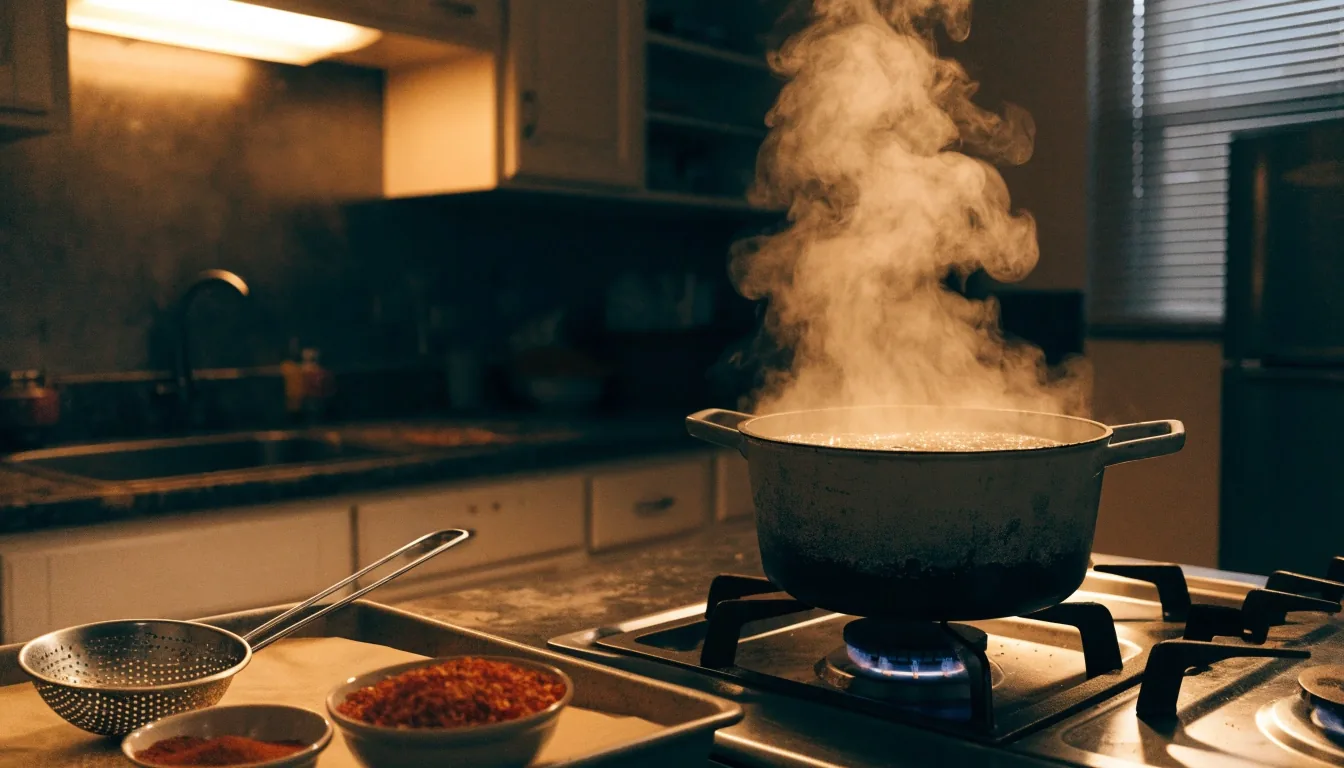
The lessons cover oil volume and safe temperatures for a normal home stovetop, plus ventilation notes for the hotter paste levels. If your stove runs hot or your pot is shallow, the setup lesson walks you through how much oil to use and where to hold the temperature before the first batch goes in.
Bring from your own kitchen
Dutch oven or countertop fryer, thermometer, tongs, wire rack, sheet pan.
Nice to have
Small pot for warming paste, splatter screen, instant-read probe for tenders.
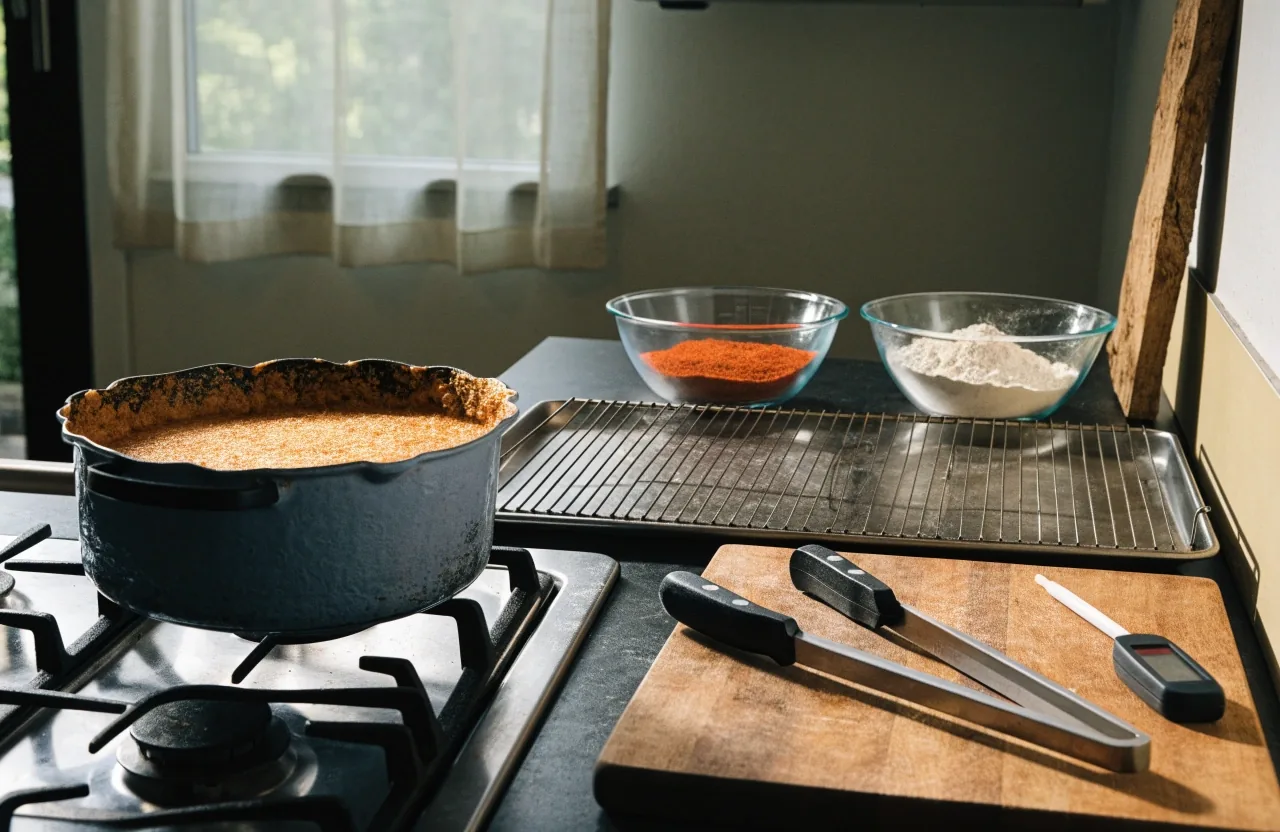
No commercial range, no special order — the setup lessons are written around what a home stovetop can actually hold.
Ingredients and substitutions
The recipes use standard grocery items: chicken, flour, paprika, cayenne, brown sugar, vinegar, pickles, and white bread. If a specific chili is hard to find, the course notes substitutions that keep the heat level consistent.
The core basket
Chicken, all-purpose flour, paprika, cayenne, brown sugar, vinegar, pickles, white bread. Nothing here needs a specialty shop.
When a chili is missing
The notes pair a substitute with an amount adjustment, so the paste lands at the same heat level instead of drifting.
Reaper-level handling
The lessons are clear about gloves, ventilation and small batches, and treat this tier as an extreme option rather than an everyday serving.
Heat tolerance and levels
If you are new to the style, start at mild or medium. Get the paste balanced and the crust crisp before climbing. The ladder runs mild, medium, hot, extra hot, and Reaper-level, and each tier is a complete plate.
Moving up is a matter of adjusting chili amounts and types on the same base, not learning a new recipe. That is why the early lessons spend their time on the brine, the dredge and the fry — once those are steady, the heat level is a dial you turn.
Heat Ladder & Sauces- Mild Balanced paste, gentle warmth — the tier to learn the crust on.
- Medium Noticeable heat that still lets the bread and pickles do their job.
- Hot The familiar Nashville burn — chili amounts step up on the same base.
- Extra hot Chili types change, not just quantities, for a sharper and longer burn.
- Reaper-level An extreme tier taught with gloves, ventilation and small batches in mind.
How the lessons work
Everything is online and self-paced. You can pause on a step, rewatch a technique, and cook along in real time. Most students begin with the brine and dredge before the heat ladder.
If your plan includes live sessions or feedback, you can get input on a specific batch — a crust that came out pale, a paste that tasted flat, a batch that needed longer in the oil. Compare what each plan includes before you choose.
Compare enrollment plansPause and rewatch
No live clock. Step back through a technique as many times as the crust needs.
Cook along in real time
Follow the lesson at your own pace with the pot on and the timing running.
The order most students cook in
- 1 Brine the chicken and let it sit while you set up the oil.
- 2 Build the dredge and press the coating on so it grips.
- 3 Fry in small batches and hold the temperature between them.
- 4 Bloom the paste, spoon it over, then move up the heat ladder.
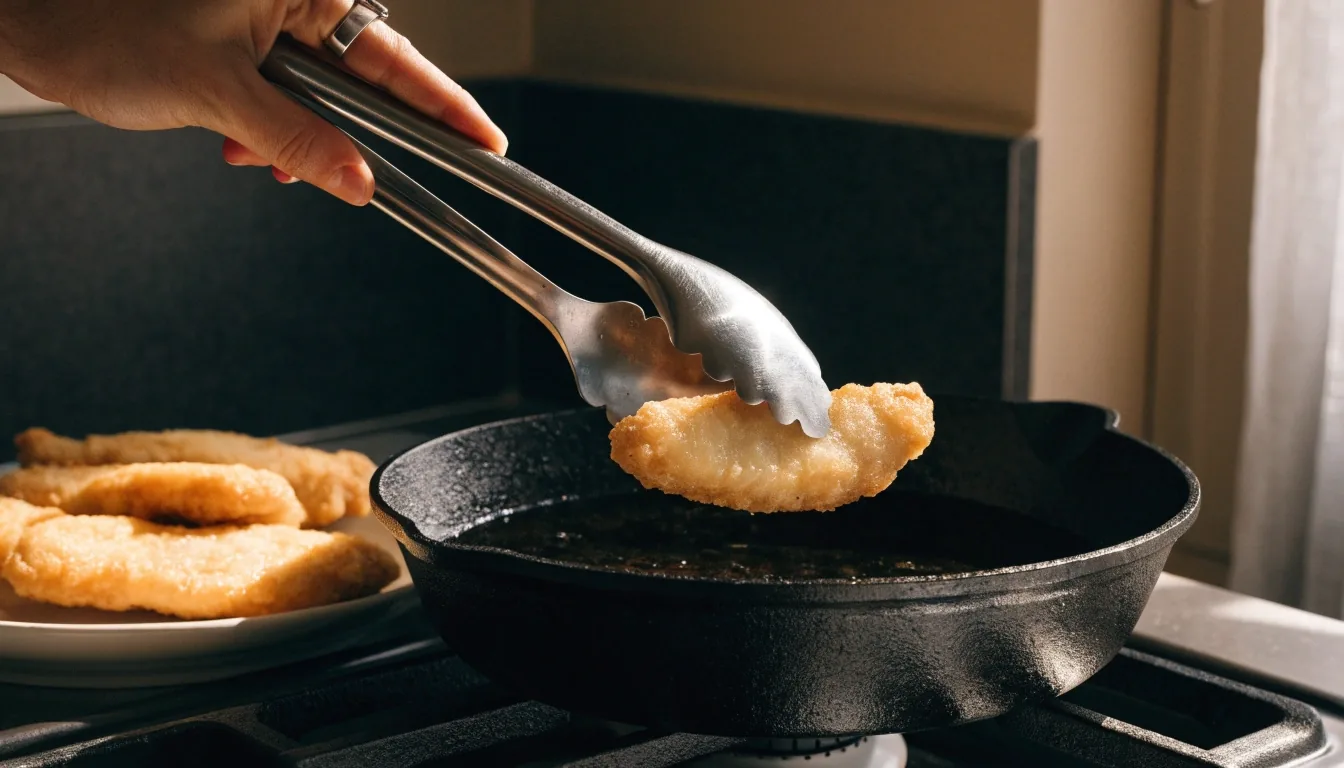
Nearly every batch that goes wrong goes wrong in one of three places.
Common cooking problems
Pale, greasy crust
Usually the oil dropped too low when the chicken went in. The lesson covers how much to add per batch and how long to wait before the next one.
Coating slides off
Usually the surface was too wet before dredging. Dry the pieces, work in smaller groups, and press the flour in rather than shaking it on.
Paste tastes flat
Usually it needed longer blooming or more salt. The fix is timing and seasoning order, not a heavier pour of chili.
Each of these has its own lesson clip with the fix shown, rather than a list of symptoms to guess from. If a problem is not on the list, the contact page is the fastest way to get an answer about your specific pot, oil or stove.
Plating and serving
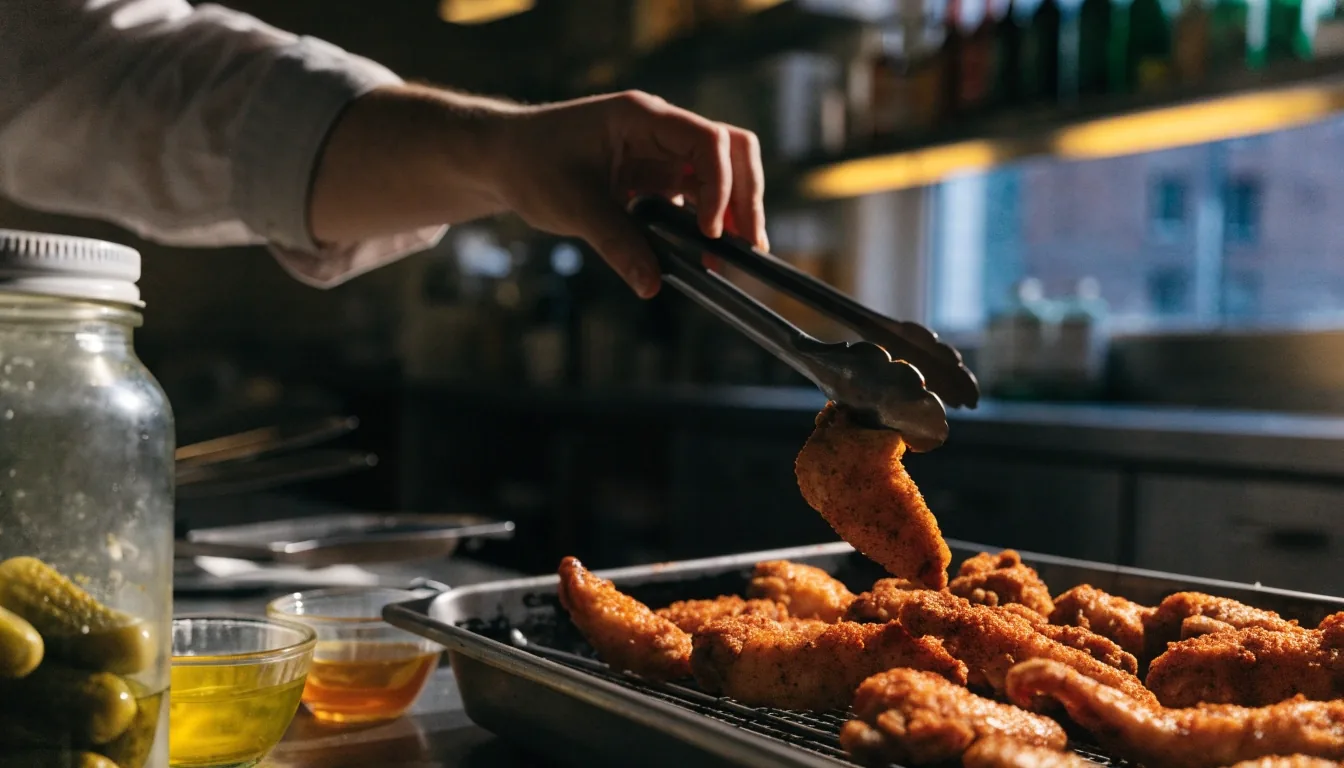
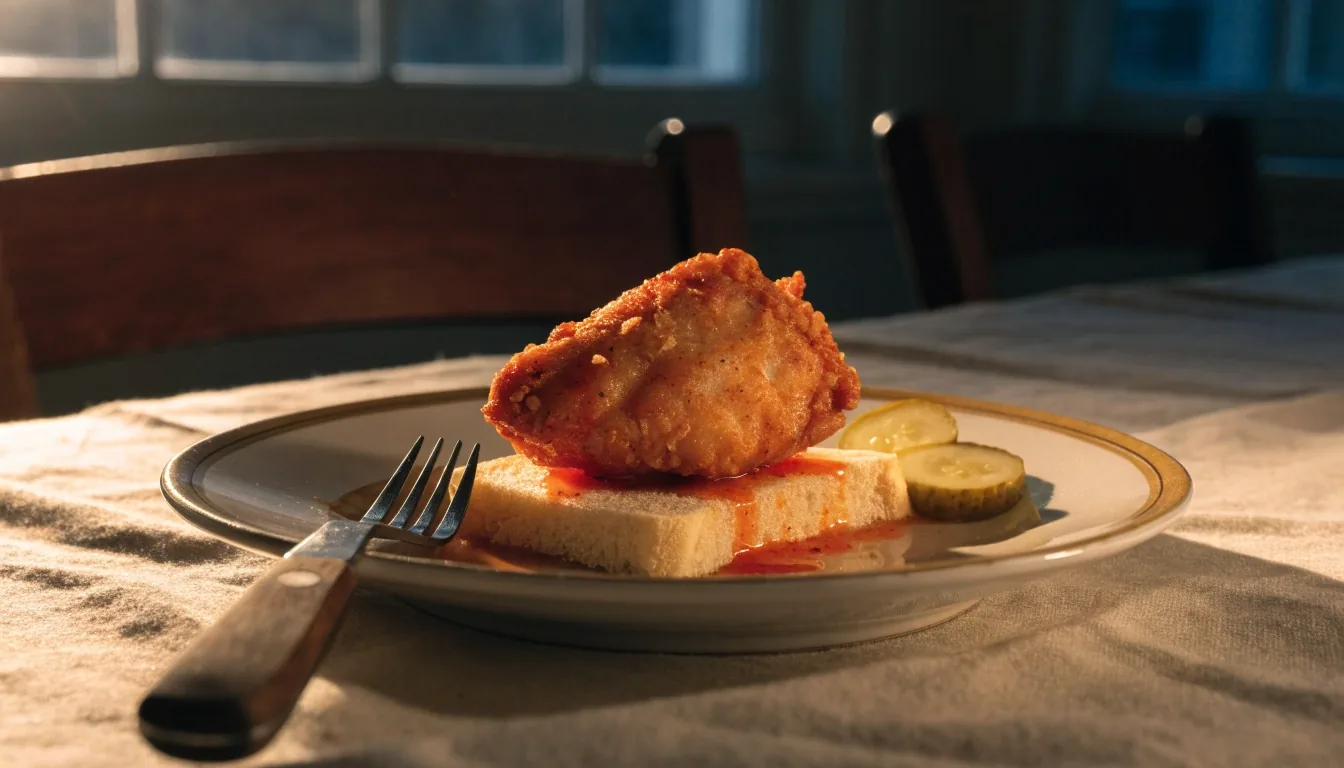
Hot chicken is best eaten soon after it is sauced, so the course covers timing. White bread goes under the chicken to catch the spiced oil, and pickles go alongside. The plating lesson covers how much sauce to spoon over each piece and how to serve a group without the bread going soggy.
If you are feeding people who sit down at different times, the lesson shows how to hold a tray, sauce in two passes, and keep the first plates as good as the last. That matters more with a hot or extra hot paste, where the oil keeps moving once it is on the plate.
What goes on the plate
- White bread underneath, torn or sliced, to catch the spiced oil.
- Pickles alongside — they cut the paste and reset the palate between bites.
- Sauce spooned over each piece, not poured across the tray.
Timing for a group
Fry in batches, hold the finished pieces on a rack, and sauce only the plates that are about to move. Bread goes under at the last minute.
Quick answers
Three questions come up more than any others. Open the one you need, or send anything else through the contact page and we will answer it directly.
What makes Nashville hot chicken different from regular spicy fried chicken?
The spice is a paste or sauce applied after frying, and it is traditionally served with white bread and pickles. That combination defines the style — the crust is set first, then the heat goes on top.
Which cut is easiest for a beginner?
Wings are forgiving on heat. Tenders are the least forgiving because they overcook quickly. Start with wings while you learn how the oil behaves, then move to tenders once your timing is steady.
Can I cook the Reaper-level tier safely at home?
Yes, with care. The course covers small batches, ventilation, and glove use, and treats it as an extreme tier rather than a weeknight serving. Cook it when you can keep the kitchen clear and take your time.
Still stuck on something in the kitchen?
If your question is about your own pot, oil, stove or a batch that did not come out right, send it through the contact page. The course is taught from a real kitchen at 2801 W Sunset Blvd in Los Angeles, and questions from home cooks are the ones that shape the lesson notes.
Wings Snob · 2801 W Sunset Blvd, Los Angeles, CA 90026 · +1-323-555-0947 · Monday–Friday, 9:00 AM – 6:00 PM